01
Call Us
A real person answers 24/7. Tell us what's wrong — we'll give you a ballpark quote on the phone and schedule a time that works.
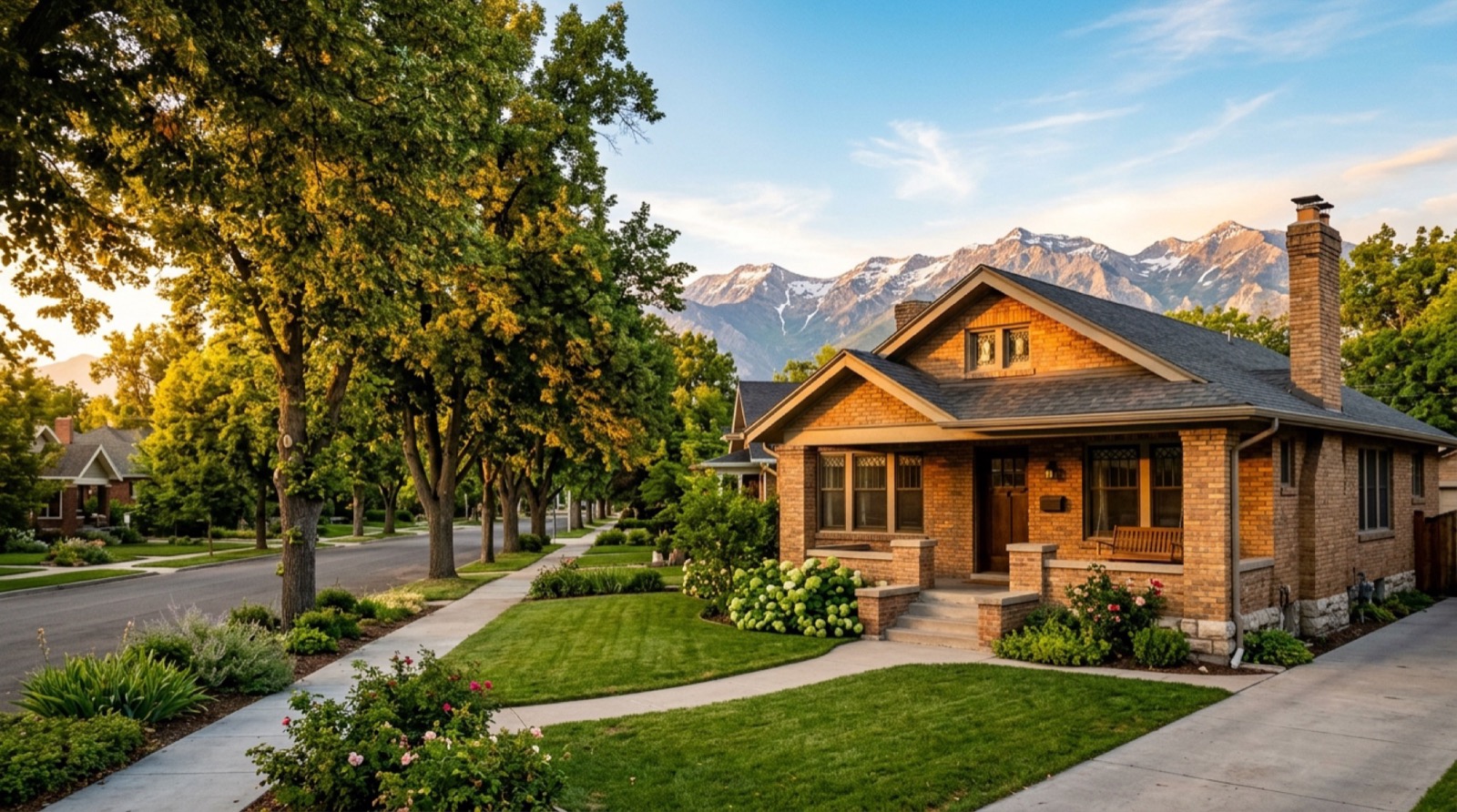
Salt Lake City's housing stock ranges from Victorian-era homes in The Avenues and 1940s bungalows in Sugar House — many still carrying original cast iron drain lines and galvanized supply pipes — to modern downtown high-rises built this decade.
Plumbing in Salt Lake City
Burst pipes, sewer backups, and gas leaks — 24/7 dispatch with a real person on the line.
Learn moreTank and tankless repair, replacement, and same-day install — Rheem, Bradford White, Navien.
Learn moreHand augers, cable machines, and hydro-jetting for kitchen, bath, and main-line clogs.
Learn moreTrenchless pipe bursting and CIPP lining — replace a failed lateral without destroying your yard.
Learn moreGalvanized and failing copper replaced in PEX-A or PEX-B — pressure restored across every fixture.
Learn moreAcoustic listening, infrared imaging, and pressure testing to pin slab and wall leaks before demolition.
Learn moreWhat to Expect
01
A real person answers 24/7. Tell us what's wrong — we'll give you a ballpark quote on the phone and schedule a time that works.
02
Our tech arrives in a Valley Plumbing van, in uniform, shoe covers on. Diagnoses the issue and quotes flat-rate before any work starts.
03
We complete the work, clean up, and walk you through everything we did. Warranty covers our work for the life of the parts.
Valley Plumbing
Real people answer 24/7. Same-day service available.
Plumbing in Salt Lake City
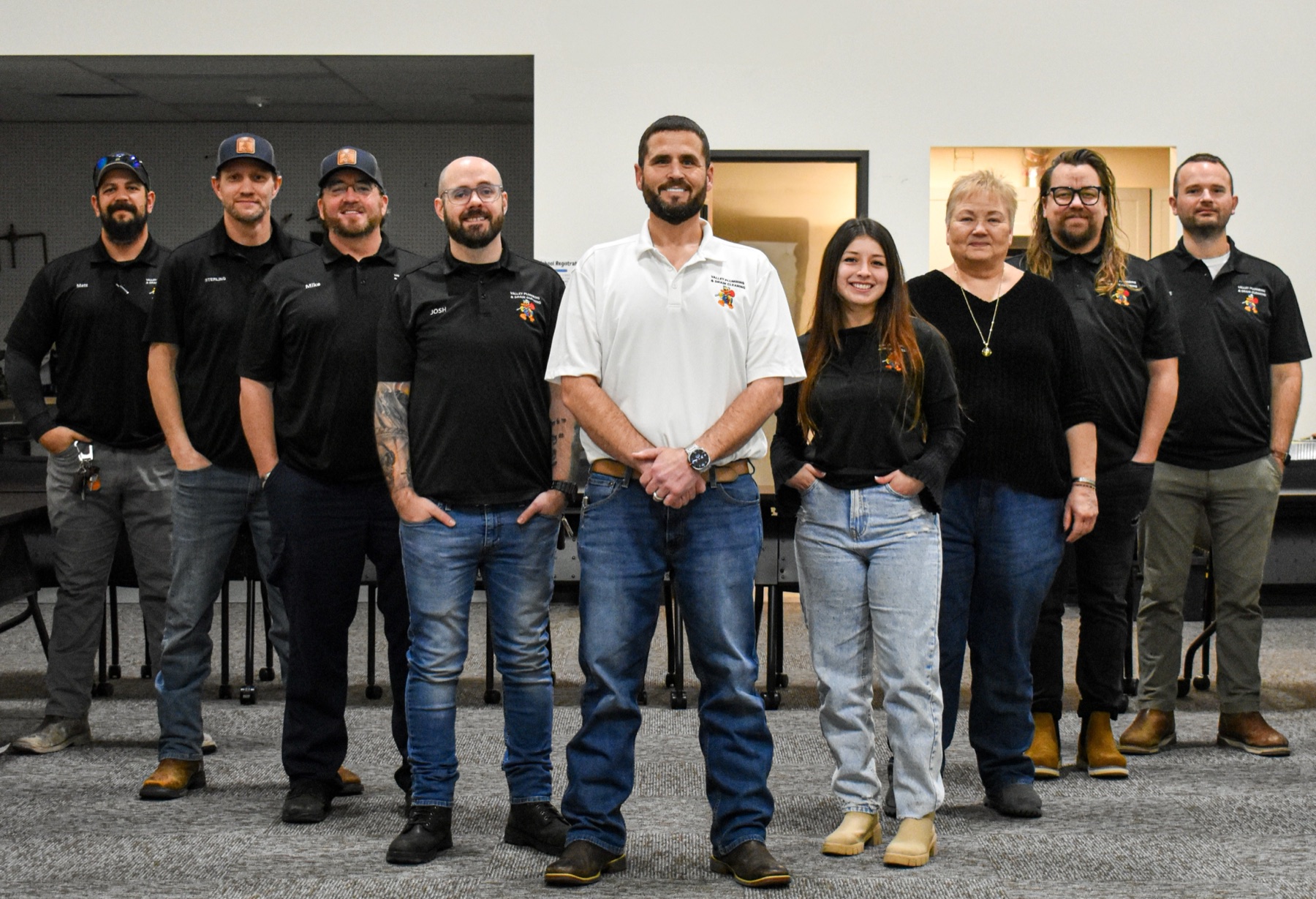
Valley Plumbing, Heating and Cooling has been running plumbing trucks through Salt Lake City since 2011. Every plumber who shows up at your door is a Valley employee — Utah DOPL-licensed, background-checked, drug-tested, and trained in-house on the Uniform Plumbing Code that governs every permit inspection in Salt Lake County. We don't sub the work out, we don't hand you off to a call center, and we've been pulling galvanized, cutting cast iron, sweating copper, and crimping PEX in this valley long enough to know what's actually sitting behind the drywall in a Salt Lake City home before we cut into it.
SLC's housing split drives the work: The Avenues and Sugar House call for cast-iron drain replacements and galvanized repipes from 1920s–40s homes, while downtown high-rises and 9-Line corridor construction need commercial rough-in and tenant improvement work. Older neighborhoods frequently have lead service lines that SLCDPU is replacing through the Lead Service Line Replacement Program — but homeowner-side laterals are still the owner's responsibility. With a mix of historic and newer housing across Salt Lake City, we see the full material timeline in a single service area: galvanized steel supply lines from the 1940s and 50s choking off at the threads, cast iron drain stacks from the 1950s–60s channeling out along the bottom, Type M copper from the 1970s–80s developing pinhole leaks after four decades of hard-water attack, and PEX with PVC DWV in anything built from the mid-90s forward.
SLC spans roughly 150 years of building — Victorian-era homes in The Avenues and Capitol Hill, 1920s–40s bungalows in Sugar House and Liberty Wells, post-war ramblers in Rose Park and Glendale, and brand-new midrise infill on the 9-Line corridor and downtown. The ZIP-by-ZIP variance is dramatic. That mix is why diagnosis matters more than the repair itself. A slow kitchen drain in a 1955 rambler in The Avenues is almost never the same problem as a slow kitchen drain in a 2015 build out in Sugar House. One is usually cast iron scaling internally plus a grease-loaded P-trap; the other is almost always a venting issue or a poorly-pitched PVC run that was marginal from day one. We come in, camera it, and tell you which one you're dealing with — not guess and swap parts.
Water heater work is the single highest-volume call we run inSalt Lake City. Water here comes from Salt Lake City Department of Public Utilities (SLCDPU), and hardness runs very hard — typically 350–450 ppm; slcdpu publishes ccr values in the 200–250 mg/l caco3 range depending on source blend. That calcium and magnesium precipitates out as scale the second the water hits the heating element or the bottom of a tank. On a standard 40- or 50-gallon tank-style heater, you can pull a drain pan of sediment out of a five-year-old unit in Salt Lake Citythat looks like wet concrete. Sediment insulates the burner from the water, cuts recovery rate, and cooks the tank from the bottom up. The manufacturer's 10- or 12-year warranty assumes soft water — in Salt Lake City, you should expect 8 to 10 years of real service life out of a tank, less if it's never been flushed.
We stock Rheem, Bradford White, and A.O. Smith tank units on every truck and handle most Salt Lake City tank replacements the same day you call — including the dielectric unions, expansion tank, sediment trap on the gas line, and T&P discharge routed to code. On the tankless side, Navien and Rinnai are the units we install most often, and we descale every tankless we service at the annual maintenance interval because a tankless that isn't flushed yearly in Salt Lake City's hard water will throw an error code inside of three years. Tankless makes sense when the household is running out of hot water, when the equipment closet is too tight for a 50-gallon tank, or when a homeowner wants recirculation with on-demand delivery — but it's not automatically the right answer. We'll run the math honestly.
Drain clogs break into two categories and the difference matters. A single slow fixture — one sink, one tub, one toilet — is almost always a local clog in the trap arm or branch line: hair in a bathroom sink, grease in a kitchen line, wipes in a toilet (flushable wipes are never flushable; they're the number one toilet-call culprit we see in Salt Lake City). Those get cleared with a hand auger or a small cable and you're done. But when multiple fixtures back up at once — toilet gurgles when the washer drains, tub rises when the toilet flushes — the problem has moved past the branch and into the main building drain or the sewer lateral to the street. That's a different diagnosis and a different truck.
Every main-line call we run in Salt Lake City gets a sewer camera inspection before we quote anything beyond a clearing. The camera tells us whether we're looking at root intrusion at a bell-and-spigot clay joint, grease and scale buildup in a cast iron stack, a belly where the pipe has lost grade, or a collapsed section that's not coming back with cabling. For root-heavy or grease-heavy lines, hydro-jetting at 3,500–4,000 PSI scours the pipe wall clean in a way a cable never can — a cable punches a hole through the clog; a jetter actually restores the pipe ID. For fully failed laterals, trenchless pipe bursting pulls a new fused HDPE line through the old path with only two small access pits, so you keep your driveway and your landscaping.
Salt Lake City's housing stock leans heavily toward mix of all (galvanized, cast iron, copper, PEX), and each material fails in a predictable way. Galvanized steel — the supply material of choice in pre-1960 Utah construction — corrodes from the inside, the threaded joints close off first, and what started as low pressure in the upstairs shower turns into rusty first-draw water and eventually a pinhole behind the drywall. A galvanized repipe in Salt Lake City almost always runs in PEX-A with cold-expansion fittings or PEX-B with crimp rings, with copper stub-outs at the fixtures for a rigid connection point. Full-home repipes are 2 to 4 days depending on the drywall access, and we patch and texture back to paint-ready.
Copper has its own failure pattern. Type M copper from the 1970s and 80s in Salt Lake City is now 40-plus years old and sitting in water hard enough to strip the protective oxide layer — pinhole leaks in exterior walls, behind fridges, and inside slab penetrations are a weekly call. We locate them with acoustic listening equipment and infrared cameras before we open anything up, so you don't end up with a demolition project chasing a leak that was six feet from where the drywall cut went in. Slab leaks in particular — where a hot or cold line under a post-tension or concrete slab fails — need to be pinned within inches before cutting, and our leak-detection rigs routinely get us to the spot without guessing. Once located, we reroute overhead through the attic where the slab access doesn't make sense, or cut and splice in place when it does.
Faucet repair, toilet replacement, angle-stop swaps, supply-line replacements, and full bathroom rough-ins are the day-in day-out work that keeps a Salt Lake City plumber busy between the bigger jobs. We install fixtures from the brands that hold up in this water — Toto and Kohler on the toilet side, Delta and Moen on the faucet side, and higher-end Kohler, Grohe, and Brizo trim for remodels that justify it. On rough-ins for bathroom remodels or additions, we set the drain, waste, and vent (DWV) to UPC pitch, vent every fixture properly (no S-traps — Utah hasn't allowed those since the UPC adopted the ban, and we still find them in older DIY work), and set the supply stub-outs at the heights your tile contractor actually needs.
Gas line work in Utah is a licensed-plumber job — DOPL doesn't allow general handymen to cut, thread, or repair gas piping, and for good reason. We handle new gas runs for ranges, dryers, water heaters, outdoor grills, fire pits, and pool heaters, and we do leak detection with electronic combustible-gas sniffers, soap-bubble tests at every joint, and pressure-drop tests on the full system. The failures we see most often in Salt Lake City are corroded galvanized gas lines in 1950s–60s homes (the same material that fails on the water side), loose flare fittings at appliance connectors that were over-torqued on install, and drip-leg fittings that weren't cleaned out at the last appliance change. If you smell gas, leave the house and call Dominion Energy first — then call us to find and fix it.
Given Salt Lake City's water hardness (very hard — typically 350–450 ppm; slcdpu publishes ccr values in the 200–250 mg/l caco3 range depending on source blend), a whole-home softener is the single highest-impact plumbing upgrade most homeowners can make — it extends water heater life, stops scale buildup in fixtures and appliances, and keeps soap and detergent from precipitating out on skin and laundry. We install ion-exchange softeners sized to the grain capacity the household actually needs based on hardness and gallons-per-day draw, not whatever one-size unit a box store had on sale. Whole-home carbon filtration for chlorine and taste/odor is a common add-on, and under-sink reverse osmosis at the kitchen gives you true drinking-water quality for cooking, coffee, and ice. We'll test your water before we spec anything so the system matches the problem.
Utah is a Uniform Plumbing Code state, administered at the statewide licensing level by the Division of Occupational and Professional Licensing (DOPL). Valley Plumbing carries the state contractor's license and individual journeyman and master licenses on every crew, plus the general liability and workers' comp coverage any Salt Lake City homeowner should be asking about before a plumber shows up. Salt Lake City Building Services handles permits; the Historic Landmark Commission reviews exterior work in the Avenues, Capitol Hill, Central City, and South Temple historic districts. SLCDPU requires coordination for any water-service tap. Separate backflow testing program through SLCDPU. Water heater replacements, repipes, sewer lateral replacements, gas line additions, and bathroom rough-ins all require permits and inspections in Salt Lake City — we pull the permits, schedule the inspections, and give you the signed-off documentation for your records and any future home sale. You don't chase the building department; we do.
Burst supply lines, failed water heater tanks, sewer backups, and gas leaks don't wait for business hours — and in Salt Lake City's winter, a burst line that sits for six hours is a drywall-and-subfloor replacement instead of a quick repair. Salt Lake City's utah's urban core — dense mix of professionals, families in established neighborhoods, university population near the u, and a growing downtown residential base have earned a plumber who picks up at 2am. Home to Utah State Capitol, University of Utah, and the state's largest healthcare systems (Intermountain, U of U Health) Our emergency line is live around the clock, answered by a real dispatcher — not a voicemail or an answering service — and our typical response time for urgent calls in Salt Lake City and the rest of the 84101 service area is under two hours. If you've got water coming through a ceiling, sewage on a basement floor, or a gas smell you can't locate, stop reading and call (801) 341-4222.
Same-day service · Flat-rate pricing · Family-owned since 2011.
By the Numbers
15+
Years Serving Utah
70,000+
Jobs Completed
4.8★
Google Rating
24/7
Emergency Response
“Called Valley Plumbing on a Saturday when our water heater died. They had a new unit installed by 4pm that same day — honest pricing, no pressure, clean work. The tech even explained everything he was doing. Easily the best plumbing experience we've had in Salt Lake City.”
Jennifer M.
The Avenues · Water Heater Replacement
Valley Plumbing
Flat-rate pricing, no surprises. We'll quote before we start.
FAQs
Yes — our Salt Lake City team covers every ZIP code from the Avenues and Capitol Hill to Sugar House, Liberty Wells, and downtown. We're typically on-site within two hours for urgent calls.
Salt Lake City water averages 400–450 ppm of dissolved minerals — among the highest in the country. That hardness deposits scale inside water heaters (cutting efficiency and lifespan), clogs showerheads and aerators, and corrodes older pipe joints. We recommend a whole-home water softener or conditioner for any home in the city.
Yes. We dispatch from a central Salt Lake City location and offer same-day appointments Monday through Saturday. For burst pipes, sewage backups, and gas leaks, we respond 24/7 — call our emergency line and a tech is typically on-site within an hour.
Absolutely. Valley Plumbing is licensed and insured in Salt Lake City and handles all permit applications through Salt Lake City Building Services. We coordinate inspections so you don't have to — and every permitted job comes with documentation for your records and future home sale.
More Valley Services in Salt Lake City
Valley Plumbing runs plumbing, HVAC, and excavation crews out of the same dispatch. One call, one trusted team, flat-rate pricing across every service we offer.
Why Valley Plumbing
Utah homeowners have leaned on Valley for over two decades. Here's why.
Every tech is state-licensed, background-checked, and continuously trained.
Real humans on the phone, techs dispatched fast, any hour, any day.
We quote before we start. No hidden fees. No bait-and-switch.
Shoe covers on, drop cloths down. We leave your home cleaner than we found it.
4.8
3,132+ Google Reviews
Plumbers near Salt Lake City
Available Around the Clock
Burst pipe, no heat, AC down? Real plumbers pick up — no answering machines. Valley Plumbing serves Salt Lake City and surrounding areas any time, day or night.
Licensed & Insured — Utah Plumbing Contractor