Vac Truck
VAC TRUCK HYDRO-EXCAVATION — NON-DESTRUCTIVE SLC DIGGING
Daylighting a 1920s cast iron gas line in the Avenues, potholing for fiber install along State Street, exposing layered legacy utilities under a Capitol Hill addition footprint? Our vac trucks do it with water and vacuum — no blade to the wrong pipe.
4.8★ on Google
3,132+ reviews
24/7 Emergency
60–90 min dispatch
Licensed & insured
Utah plumbing contractor
5 Utah counties
50+ cities served
Flat-rate pricing
Quoted before we start
Overview
Why hydro-excavation matters in pre-1940 SLC
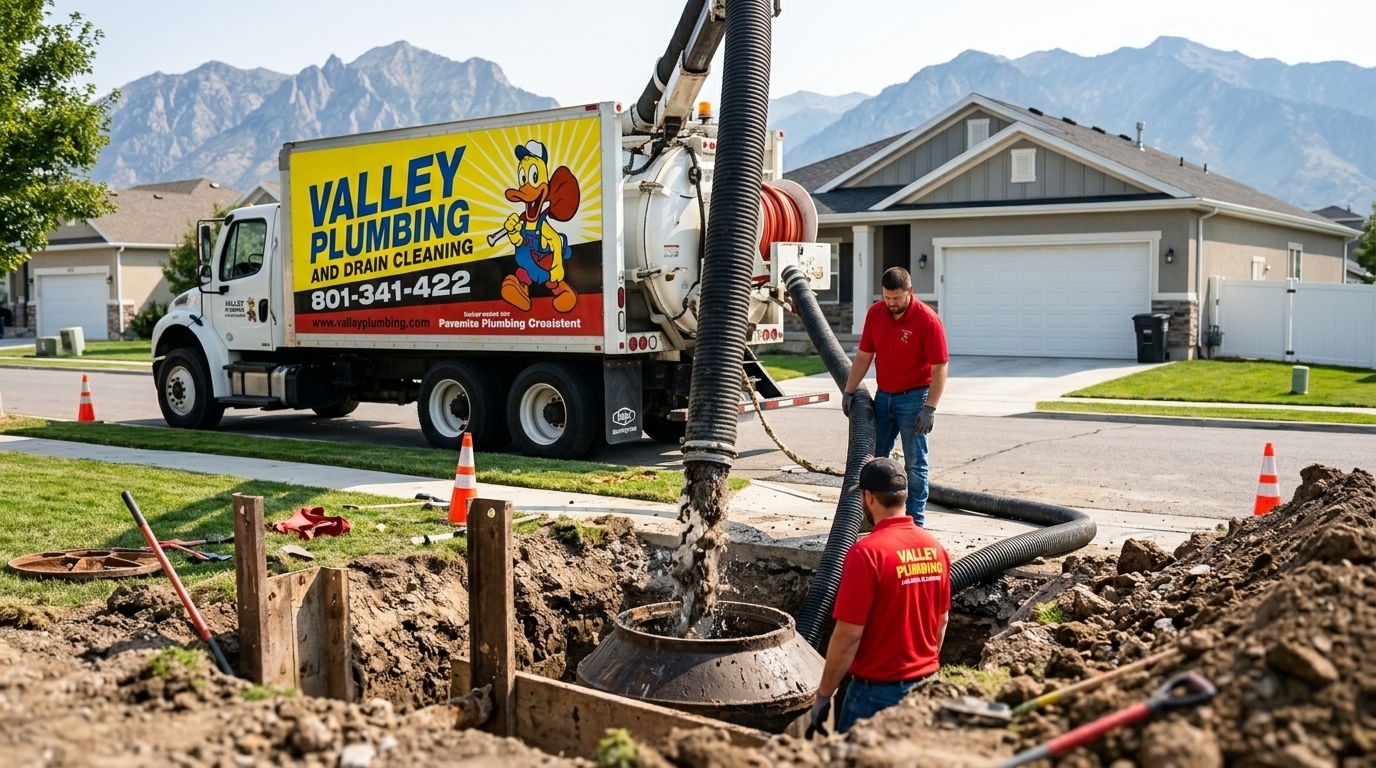
A vac truck — properly called a hydro-excavation or hydrovac truck — uses a high-pressure water wand to break soil into slurry, then a 15-inch industrial vacuum hose to suck the slurry into a 10-13 cubic yard debris tank. The result is a precision hole with intact, undamaged utilities at the bottom. No blade, no teeth, no tiger-tooth bucket risking a $40,000 fiber cut. In SLC specifically, hydro-excavation matters more than anywhere else in our service area because of two factors: the most layered legacy infrastructure in Utah lives under pre-1940 SLC neighborhoods, and the Wasatch clay-cobble soil makes blind digging near any buried utility genuinely dangerous.
What's actually under an Avenues yard
Pre-1940 SLC blocks have utility generations stacked on top of each other. A typical Avenues block has: 1920s terra-cotta storm drain (often abandoned, sometimes not), 1940s cast iron gas service (replaced upstream but stub may still be buried), 1960s steel water service, 1980s PVC sewer lateral (sometimes sharing trench with the older clay main it replaced), and modern fiber and cable from the last 20 years — all in the same 4-6 foot excavation envelope. Blue Stakes 811 covers maybe 60% of what's actually buried. The rest is unmarked, unmapped, and waiting for a steel bucket edge to find it the hard way.
Hydro-excavation is the answer because water at 2,500-3,500 PSI breaks soil without the shear force of a steel bucket — gas lines, fiber optic conduits, water services, and primary electrical all survive hydro-excavation even at full operating pressure. We daylight (expose with hydro-excavation) before any excavation that crosses or comes within 18 inches of a known utility. Most utility owners (Dominion Energy, SLC Public Utilities, Rocky Mountain Power) require hydro-excavation within 18 inches of their buried infrastructure — it's not just a best practice, it's a contractual requirement on commercial work.
Where we use the vac truck in SLC
Daylighting buried utilities before main water or sewer line work. Standard procedure on every Avenues, Capitol Hill, Marmalade, and Sugar House job. Blue Stakes marks are off by 18-24 inches more often in pre-1940 SLC than in newer construction — the underlying utility records are aged, the trenches were dug 90+ years ago, and ground shift has moved things. Daylighting confirms exact depth and direction before the excavator starts.
Potholing for directional drilling and conduit install. SLC fiber, cable, and conduit installers contract us routinely for entry/exit potholes on horizontal directional drilling. Especially common downtown and on State Street where surface restoration on open trench is operationally impossible.
Pre-construction utility mapping under Capitol Hill or Avenues additions. Homeowner adding a basement bedroom, a small addition, an ADU? The yard above the planned footprint has 90+ years of layered utility uncertainty. Pothole grids confirm clear excavation before the GC starts.
Catch basin and SLC storm drain cleanouts. Commercial properties, HOAs, downtown buildings, and SLC public works contract us for scheduled cleanouts — 5-foot storm drain vaults, roof drains clogged with silt, parking lot catch basins full of decades of sediment.
Emergency spill response. Chemical spills into containment, flooded basements with bulk water evacuation, downtown commercial vault flooding, restaurant grease incidents. Our debris tanks are rated for liquid loads up to 3,500 gallons.
Slot trenching near live utilities. Where conventional excavation would risk strikes, we cut a precision slot trench with the vac truck — 12 inches wide, full utility depth, zero blade contact. Routine around buried gas mains, primary electrical, and live fiber on SLC commercial sites.
Why our SLC trucks are different
Heated water for winter. Frost depth in SLC is 30 inches, meaning December through March the top 2.5 feet of soil is frozen solid. Conventional excavators hammer through it. A hydrovac with a heated water system handles it cleanly — we run 180°F water and frozen soil breaks apart within minutes. Most dry-vac or cold-water rigs can't do this — they freeze up themselves on a January Avenues jobsite. Our trucks work every month of the year.
Cobble-rated debris hoses. Softball-size rocks in clay matrix don't vacuum through standard boom hoses. Our trucks run 15-inch debris hoses with reinforced walls, 350 HP blowers, and rock ejection systems — enough to pull cobble up 30 feet of boom without clogging. Lighter dry-vac units built for California sandy loam get stuck in the first hour on a Wasatch jobsite.
Pre-1940 SLC experience. Our operators have spent more time potholing in the Avenues and Capitol Hill than anywhere else in the valley. They know which blocks have surprise terra-cotta. They know how deep the original 1920s gas typically runs in Marmalade. That experience saves real money — fewer surprise-discovery slowdowns, faster completion on tight commercial schedules.
Pricing model
Vac truck work is hourly, not flat-rate, because no two jobsites are the same. We bill in portal-to-portal hours — truck leaves the 300 N yard, works the job, dumps at approved disposal, returns. Rate includes truck, operator, support tech, and dumping fees where applicable. Most residential daylighting jobs are 2-4 hours. Commercial pothole grids run 6-10 hours. Scheduled recurring work (HOAs, downtown property managers, SLC commercial accounts) gets contract pricing with discounted rates.
Blue Stakes 811 locates are mandatory even for vac truck work — the law doesn't care which tool is doing the digging. We file on every job and wait the full 48 business hour period before arriving. Locating a utility incorrectly and striking it with water is still a strike, still a fine, still a rebuild. Quality Service Club residential and small commercial customers ($79/year) get 15% off vac truck hourly rates.
Free quote
Dispatch an SLC vac truck
Tell us the scope, depth, and where the job is. We'll quote the hourly total before we leave the 300 N yard.
4.8★
24/7
Emergency
Free
Quote
Current coupons
View all10% OFF
Hydro-excavation on commercial jobs
New SLC commercial accounts. First booked job. Mention at scheduling.
Expires 12/31/2026
Mention coupon when booking. One offer per household.
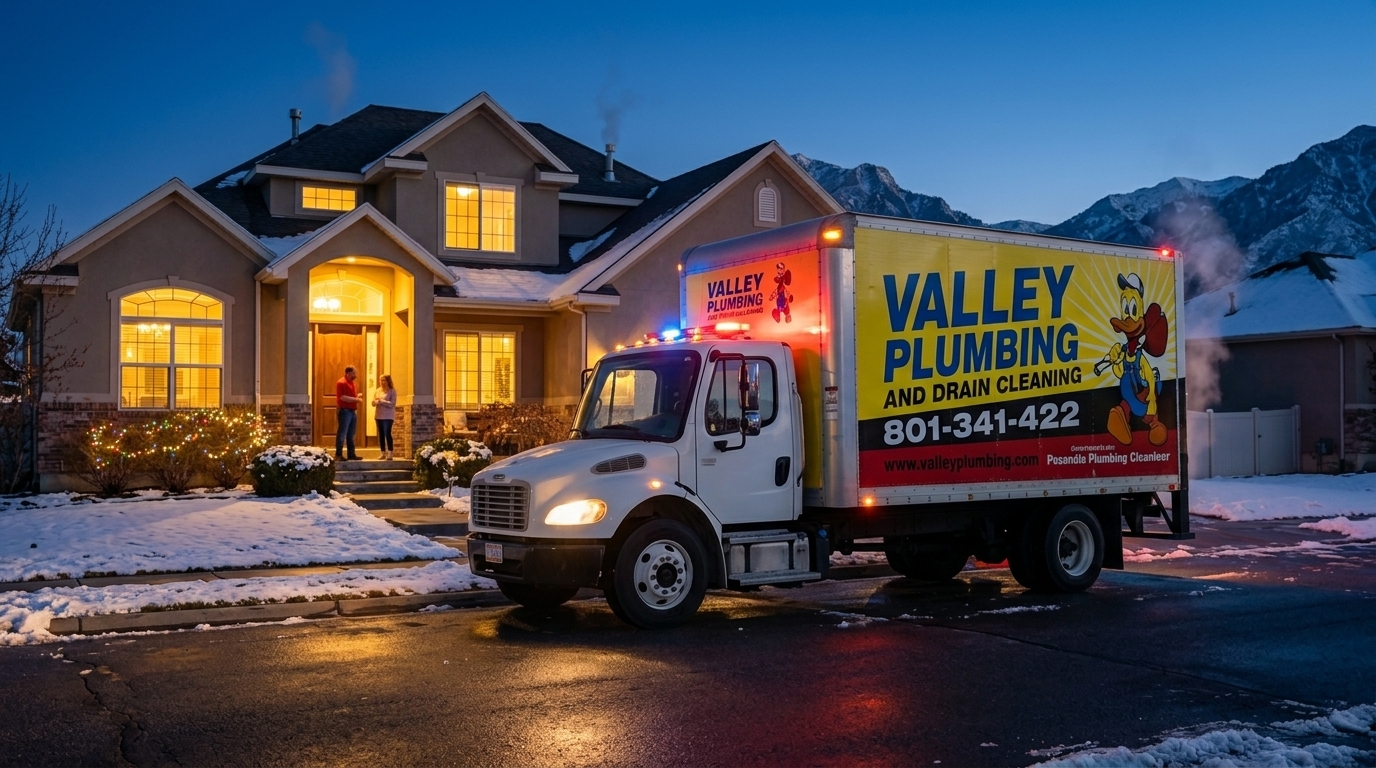
Safe digging in old SLC
A buried 1920s coal-gas stub strike is a $40,000 mistake. Vac it instead.
Pre-1940 Avenues, Capitol Hill, and Marmalade have a century of layered utility down there. Steel buckets find them the wrong way. Water and vacuum expose them cleanly every time.
PSI water jet
3,500
Across Salt Lake, Utah, Davis, Weber, and Tooele counties.
The Process
How an SLC Hydro-Excavation Job Runs
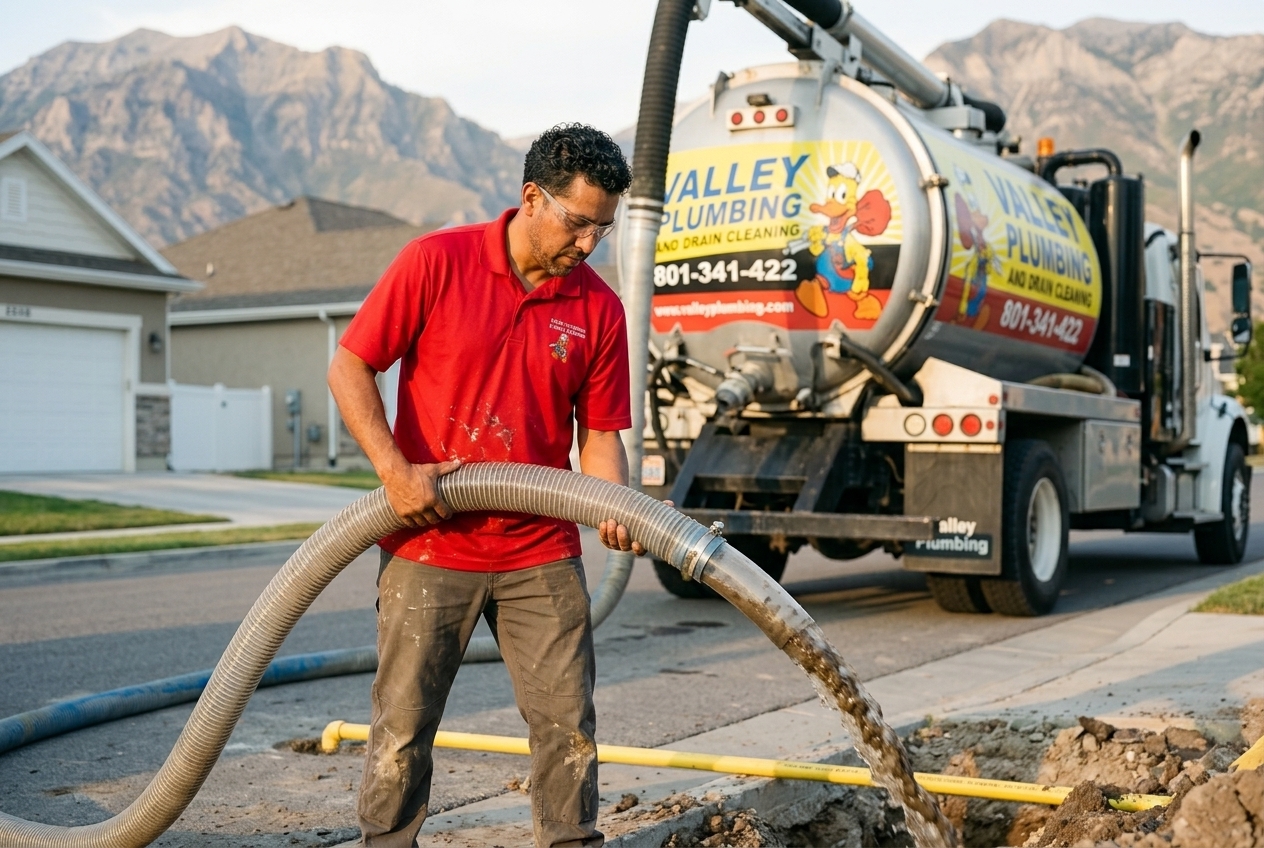
On the truck
Cable machine, jetter, and pipe camera — every call.
Blue Stakes 811 + scope walk
Every job starts with Blue Stakes 811 and an on-site walk. Pre-1940 SLC neighborhoods get a private locate pass added because Blue Stakes misses a lot of legacy utility down there. Disposal site confirmed. Nothing runs until locates are marked.
Set up + safe zones
Truck positioned, cones and signage placed, spotter assigned. Soft-dig safety perimeter established around any known live utility. Water tank filled to 1,200 gallons. Heated water active for winter operations.
Breakup + vacuum
High-pressure water wand at 2,500-3,500 PSI breaks soil into slurry. 15-inch boom hose vacuums slurry into debris tank. Operator works methodically — utilities daylighted undisturbed, even century-old cast iron gas stubs.
Visual confirm + document
Once utilities are exposed, we photograph depth, direction, and pipe material. Contractors get a written report for bore planning, pre-construction records, or SLC permit files.
Backfill or handoff
Either we backfill with imported flowable fill or clean native soil, or we leave the hole open for the follow-up crew (directional driller, contractor, utility company). Debris tank offloaded at approved SLC-area dump site before leaving area.
Pricing
SLC Vac Truck Pricing
Hourly, portal-to-portal from our 300 N shop. Rates reflect 2026 SLC pricing. Contract pricing available for recurring downtown and Sugar House commercial work.
Residential hydro-excavation (4-hour minimum)
Low
$1,450
High
$2,400
Member
$1,233
– $2,040
Daylighting, potholing, single access repair — Avenues, Sugar House
Commercial hourly rate
Low
$385
High
$485
Member
$327
– $412
Per hour, portal-to-portal, truck + operator + tech
Catch basin or manhole cleanout
Low
$685
High
$1,850
Member
$582
– $1,573
Per structure, typical 5-10 ft depth — downtown commercial
Directional drilling pothole (per pit)
Low
$685
High
$1,450
Member
$582
– $1,233
2x2 or 3x3 ft pothole to bore depth — fiber/conduit installs
Slot trenching (per linear foot)
Low
$45
High
$85
Member
$38
– $72
12-inch wide precision trench near live SLC utilities
Pre-1940 SLC neighborhood pothole grid
Low
$1,850
High
$4,850
Member
$1,573
– $4,123
Multi-pit utility map under Avenues/Capitol Hill addition footprint
Emergency dispatch + after-hours
Low
$585
High
$850
Member
$497
– $723
Surcharge applied above standard hourly rate
Dump/disposal fee
Low
$150
High
$450
Member
$128
– $383
Per load, varies by content and SLC-area disposal site
Winter frozen-soil work
Low
$85
High
$165
Member
$72
– $140
Per-hour uplift for heated-water operation, December-March
Member pricing reflects the Quality Service Club 15% repair discount. Service call fees are separate.
Rates reflect typical Salt Lake City work in 2026. Blue Stakes 811 fees bundled into job pricing. Quoted rates assume standard access — crane work, rail proximity, or high-risk environments quoted separately.
Quality Service Club
Skip the bill. Skip the line.
For $79 a year, members get 15% off every repair, priority dispatch on every call, and a free annual drain and plumbing inspection — the same stuff we'd charge $195 for on a cold call.
- 15% off repairs
- Priority dispatch
- Annual inspection
- 24/7 service access
- $25 referral bonus
- Parts + labor warranty
Plumbing
$79/year
- 15% off all plumbing repairs
- Priority dispatch — skip the line
- Annual drain piping inspection
- Full home water-supply inspection
- Tag on your emergency shut-off
- $25 referral bonus
HVAC (1 unit)
$199/year
- 15% off HVAC repairs
- Priority dispatch on furnace or AC calls
- Annual furnace + AC safety inspection
- Thermostat calibration and battery swap
- Outdoor condenser cleaning check
Plumbing + HVAC
$258/year
- Everything in both plans
- Whole-home annual inspection
- 15% off every service we offer
- Priority dispatch across plumbing and HVAC
Questions? Talk to a real human — (801) 341-4222
Cancel anytime. 1-year minimum.
FAQ
Vac Truck FAQs in Salt Lake City
Commercial hourly rates run $385-$485 portal-to-portal — truck, operator, support technician, water tank filled. Residential work has a 4-hour minimum at $1,450-$2,400 total. Most daylighting or potholing jobs in SLC finish inside that 4-hour window. Contract pricing is available for downtown and Sugar House property managers, HOAs, SLC public works, and general contractors with recurring volume.
Related services
Related SLC Excavation Services
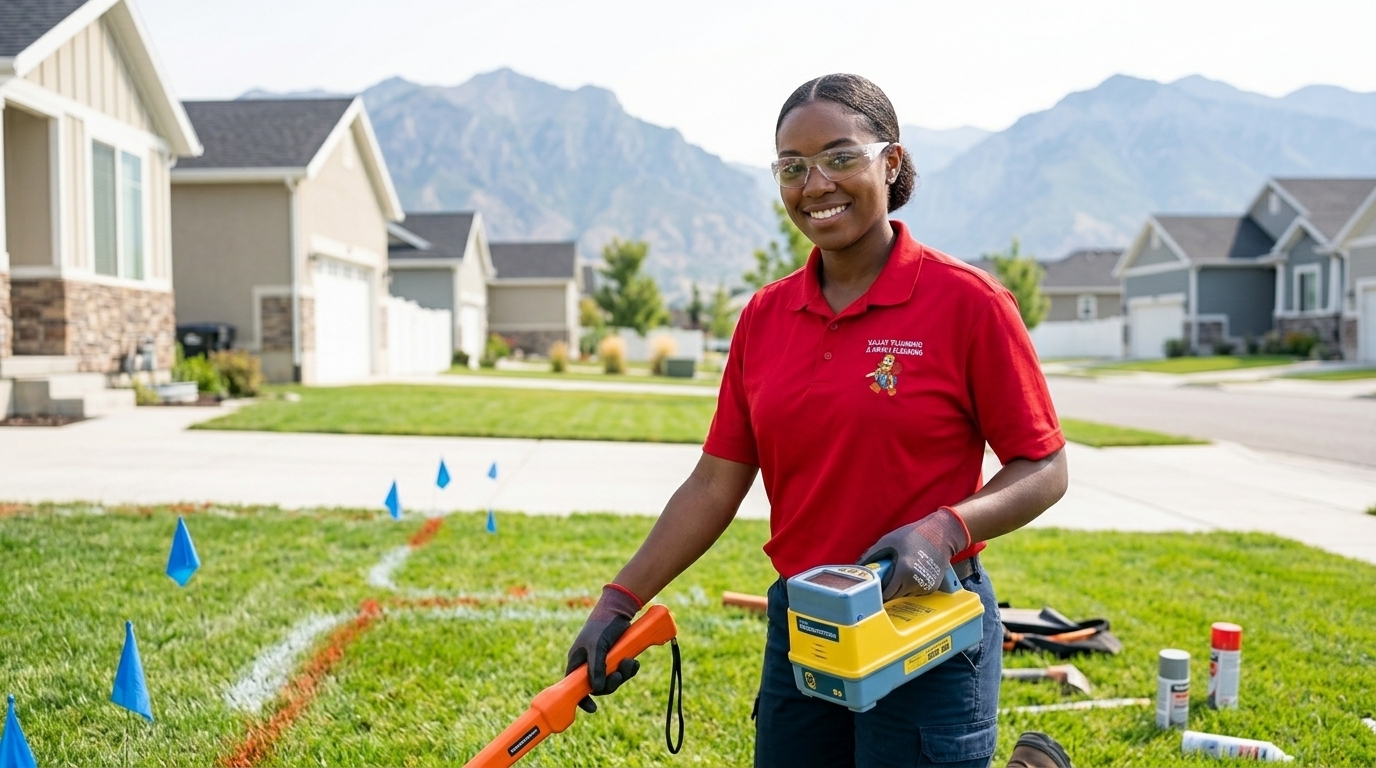
Utility Locating
Pre-dig Blue Stakes plus private locate before any SLC vac work.
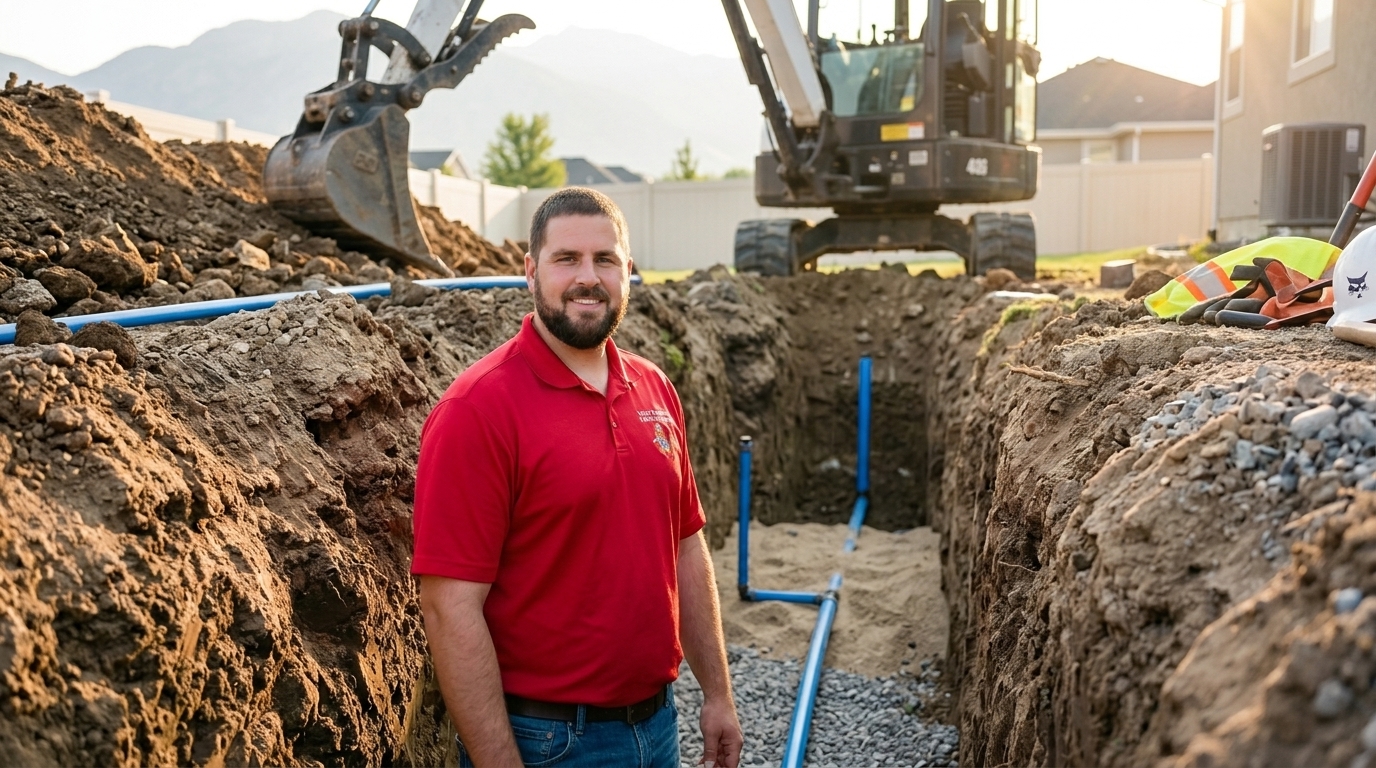
Main Water Line Replacement
Water service replacement with safe daylighting near pre-1940 SLC legacy utilities.
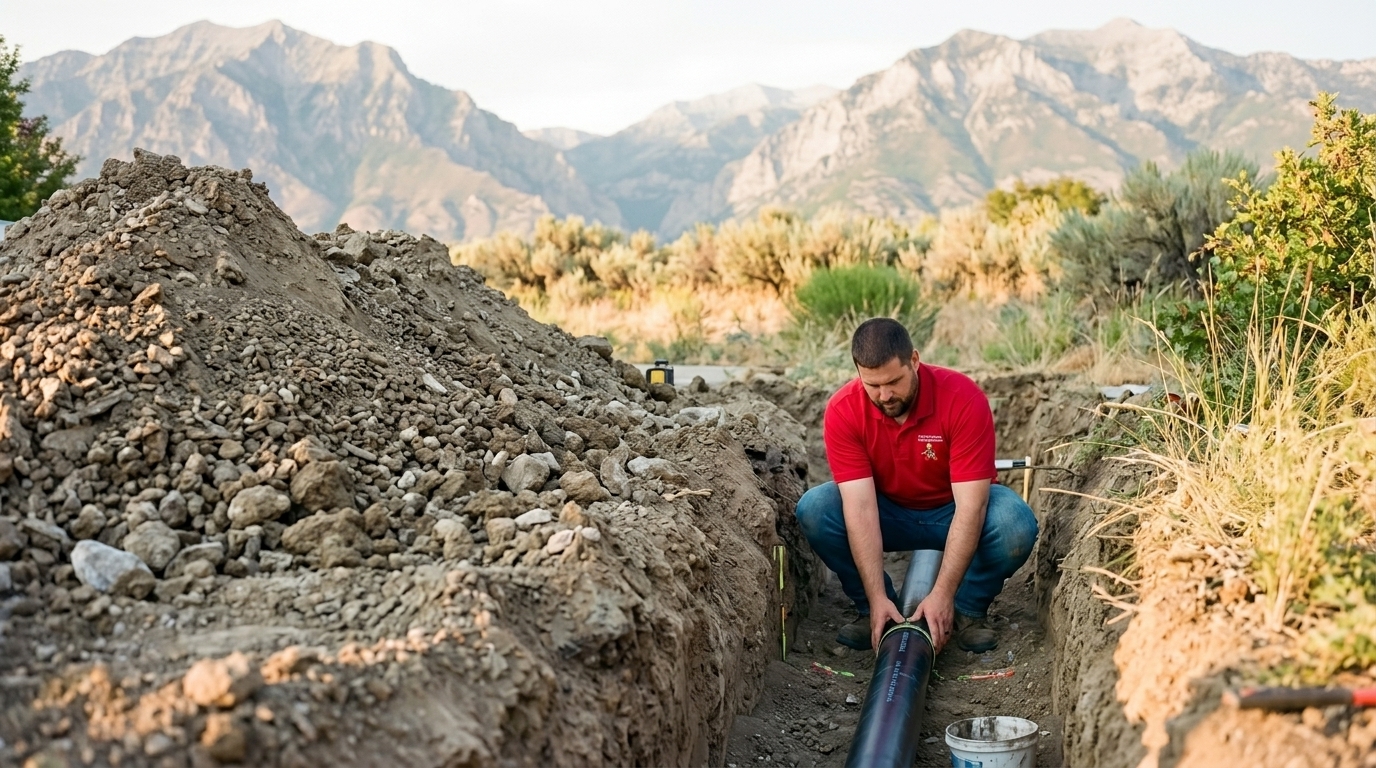
Sewer Line Replacement
SLC sewer main replacement — open-trench, burst, or line.
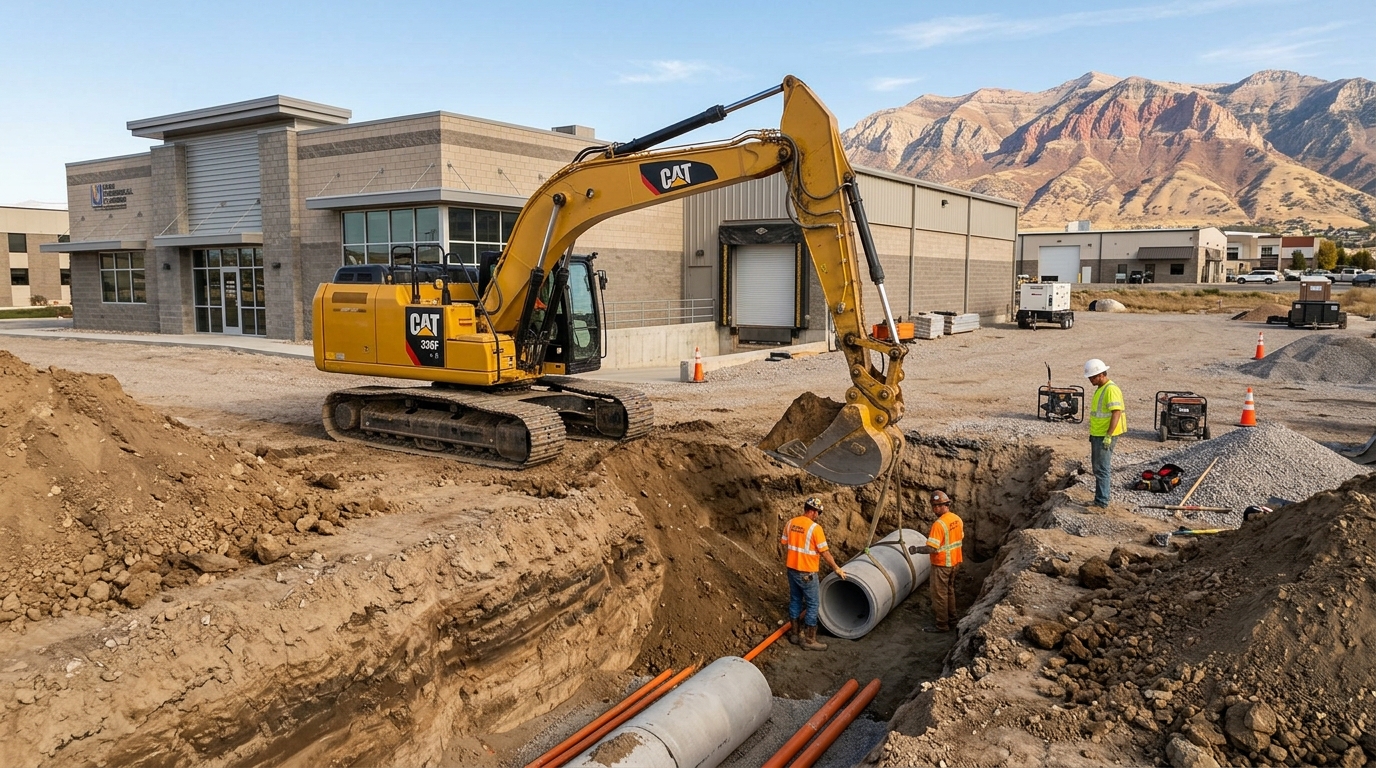
Commercial Excavation
Downtown, State Street, Sugar House commercial excavation.
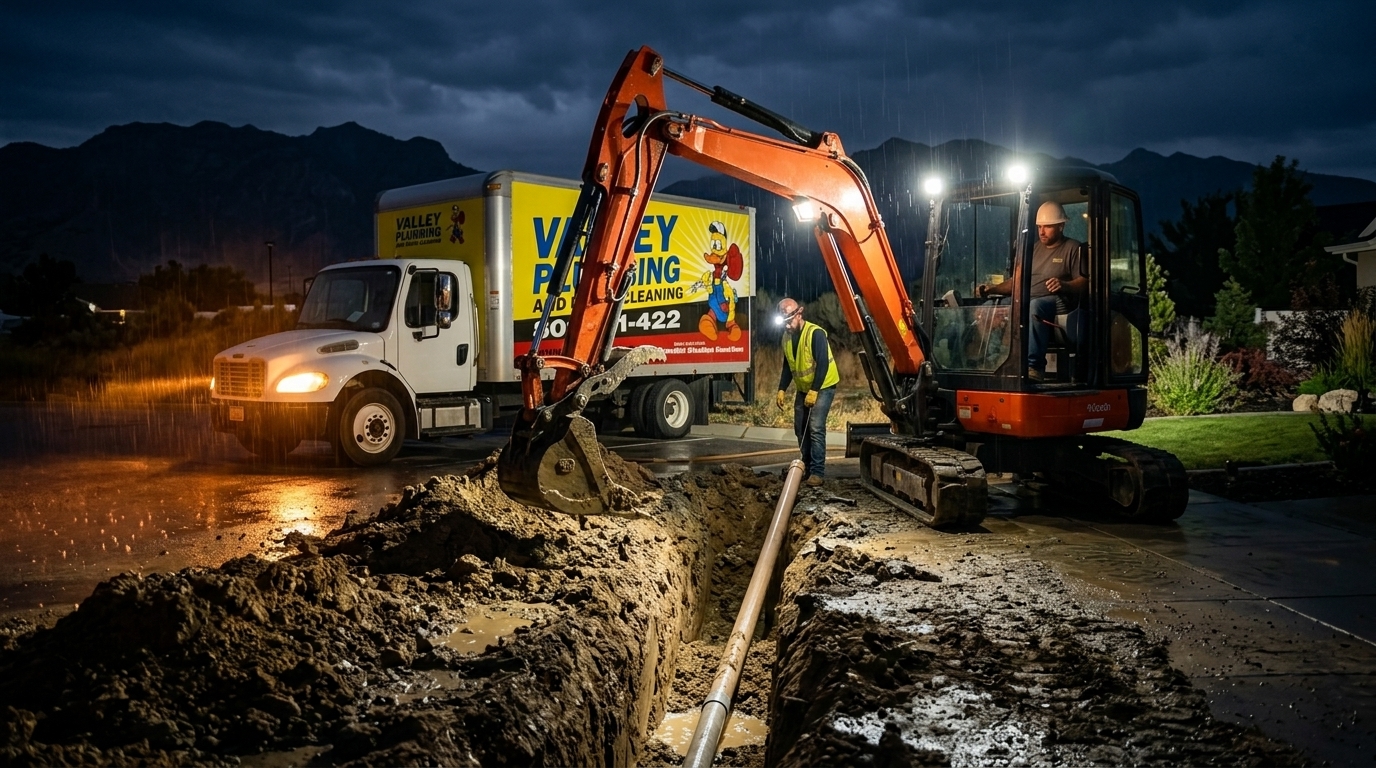
Emergency Excavation
Active SLC leak, break, or strike emergency — 24/7 dispatch.
Available Around the Clock
Emergency?
We answer 24/7.
Burst pipe, no heat, AC down? Real plumbers pick up — no answering machines. Valley Plumbing serves Salt Lake City and surrounding areas any time, day or night.
Licensed & Insured — Utah Plumbing Contractor